The political and social world is a complex beast, or perhaps better, a complex of beasts.
On the other hand, Kenneth Burke. He died in 1993, at the age of 96. Although I have been aware of his name for many decades now, as well as the titles of a few of his books, including A Rhetoric of Motives, A Grammar of Motives, and Language as Symbolic Action, it wasn’t until I began a deep dive into James Jasinski’s Sourcebook on Rhetoric a few weeks ago that I began to have an appreciation for both the arenas of Burke’s thought as well as for the depth and earnestness of Burke’s thinking.
On the other hand, Kim and I took a lunchtime walk into the hills around the dog park near our house.
When we got back to the house, I opened a package from Powell’s bookstore in Chicago. It was The Selected Correspondence of Kenneth Burke and Malcolm Crowley, 1915-1985, edited by Paul Jay. The book was a used paperback in good shape that was printed in 1990. An hour later or so, I put the book in a small backpack, along with an old, small Olympus E-PM2 digital camera which was attached to an even older lens, my first lens, the only lens I owned when I was shooting film, a Canon FD 80-200 f/4L that I used in the late 1990s with my Canon F-1, which was my film camera that I loved in part because it was fully mechanical (except for the light meter, which was powered by a small battery). The 80-200 f/4 lens is not very large for a 35mm zoom, though it is a couple times bigger than the small camera itself, giving the combination an odd, long, narrow profile. Together, though, they make a fairly small and light setup. I headed on foot toward a nearby park with tennis courts and a large field with big cottonwood trees and some picnic tables near the trees, where I thought I would sit and read some of the letters between Kenneth Burke and his friend from high school, and throughout his life, Malcolm Cowley.
On the way to the park, I saw the straight lines of an iron bridge through a dense thicket of bare winter branches. Because the lens needs an adaptor to match the camera, I have to focus manually and adjust the shutter speed manually; the aperture is fixed at f/4. None of these are a problem. Similar to many other creative processes, constraints often end up being an advantage. I did my best to focus on the bridge beyond the branches. There is no eyepiece on this camera, and the display showing the potential photograph was hard for me to see. I found a composition and took a few images of it, turning the focus ring slightly between each image, hoping that one of the images would have the objects I was imagining in focus actually in focus. I found a few more compositions with the bridge and the branches and took a few images of each, hoping that one will be interesting when I look at them on a computer screen later on.
I sat at a picnic table in the sun. I opened the book of letters between Kenneth Burke and Malcolm Crowley. My interest in that book was to discover more about Kenneth Burke, to learn about him as a person, to complement what I had been reading about his thoughts and ways of thinking.
Burke wrote in a letter to Crowley in 1917, when Burke was twenty years old and searching for a path through life that seemed to fit him, “If I write what I think, I shall come much nearer to doing what I wanted to do than if I live what I think.” This struck me because, when I was in my twenties, I felt exactly the opposite.
So I saw Burke as a kind of inverse of myself, and I wondered if he, like I, partly changed his orientation as he got older. So I turned to the years when Burke was the age I am now, the years around 1957 when he turned sixty: “To disbelieve in success is no great burden; the real terror comes when one even disbelieves in failure, and that’s where I am.”
A few days ago I decided to start reading one of Burke’s books from the 1930s, Permanence and Change, because of how Jasinski had presented the relevance of Burke’s analysis and ideas for today’s world: ideas held by terms like scapegoating and mortification, recalcitrance and casuistic stretching, secular conversion and sermonic language, recalcitrance, mystification, and eulogistic covering. All these ideas bear on issues that feel vitally important at the present. Most are pertinent to avoiding the easy tendency to dismiss people with different ideas and orientations, an avoidance that is crucial for democracy to avoid falling into irreparable division, and a cold or hot civil war. My impression from Jay’s biographical contexts for the letters (which are an invaluable resource as they guide you gently through important events that aren’t necessarily mentioned in the letters themselves) and from the letters themselves, was that Burke was a complex person who, through a youthful desire for fame and glory found himself instead in a pursuit of depth and truth in the abstract ideas and concerns of his times, particularly ideas surrounding art, writing, and philosophical thinking. He struck me as someone who was never satisfied with where he was. When he finally did receive some measure of acclaim in his eighties, I’m not sure that it made him feel the way he had thought it would when he was young.
Which do we plant first, the external or the internal? We may not have a choice. But there’s a proverb that says “Don’t ignore the roots for the branches.” The world is a complex beast or a complex of beasts. I would suggest starting with what feels most important, and let life take you from there.
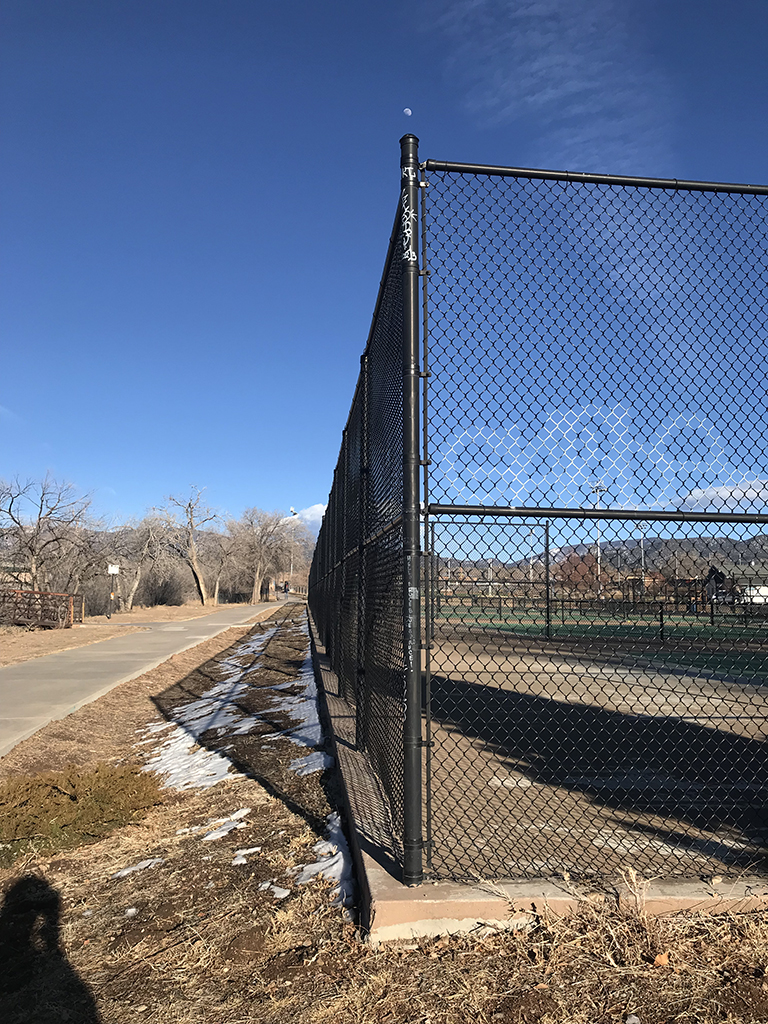
 Oblique Connection